
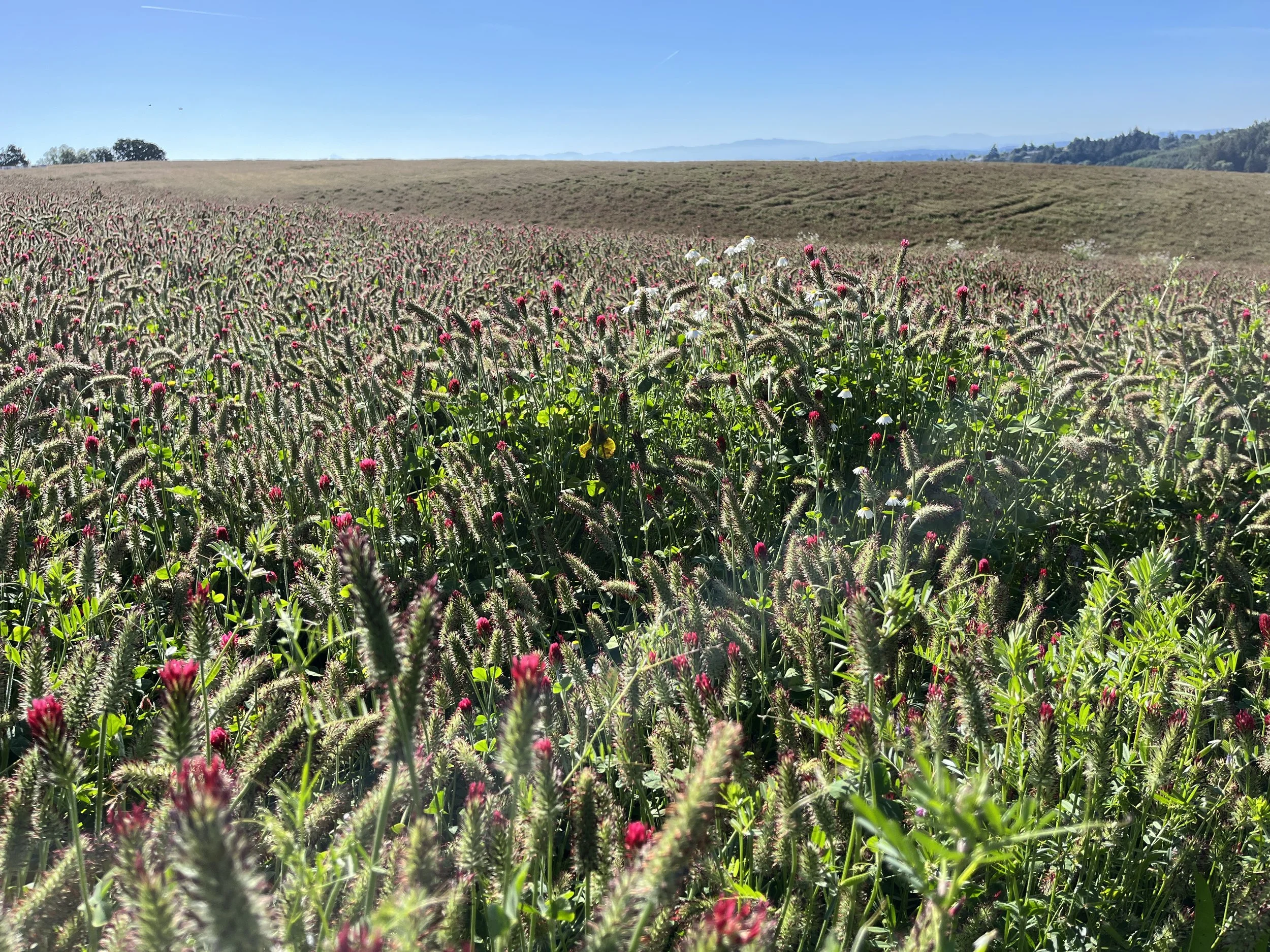
The Farm
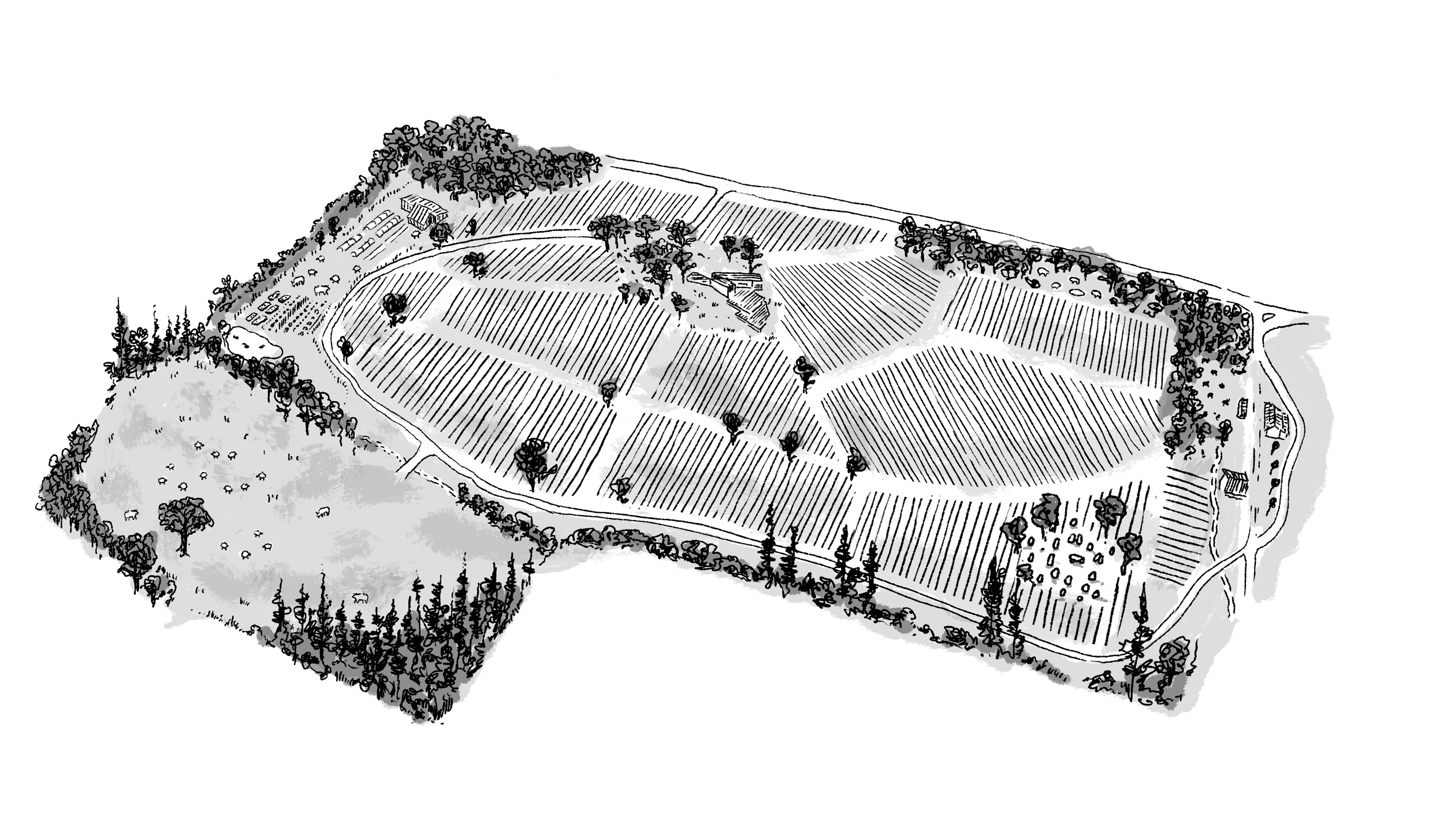
Ethos
We treat the estate as one living system — vines, animals, and plants, surrounded by forest, kept in balance so each makes the others healthier. We farm sustainably and regeneratively, building our soil season by season. As a part of this program, we minimally till, dry farm, and are systemic herbicide/glyphosate-free. Our practices grant us the honor of membership in the Deep Roots Coalition, as well as LIVE-Certification, Bee Friendly Farming, and Salmon Safe.
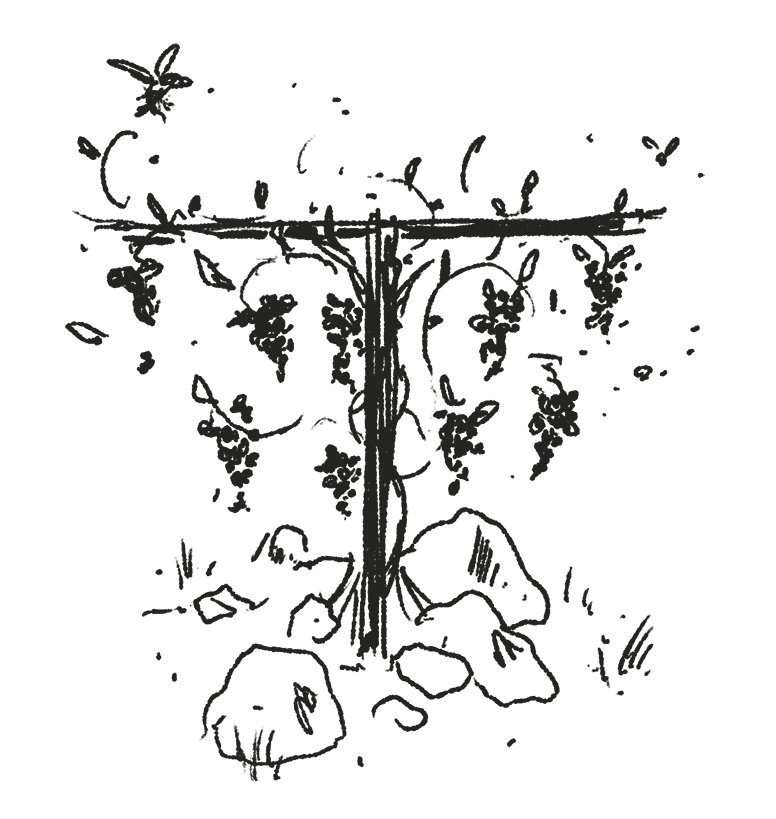
Vines
Of our 165 acres, 47 acres are under vine with several varietals, each selected for its dialogue with our terroir. Multiple clones for each varietal are cultivated to bring nuance and depth; allowing subtle differences in structure, aromatics, and season to shape the wines year by year.
-
Planted in 2021 and 2022
8 clones, 27 acres -
Planted in 2021 & 2022
6 clones, 8 acres -
Planted in 2022
2 clones, 5 acres -
Planted in 2022
1 clone, 2 acres -
Planted in 2022
1 clone, ½ acre -
Planted in 2022
2 clones, ½ acre -
Planted in 2022
1 clone, ½ acre
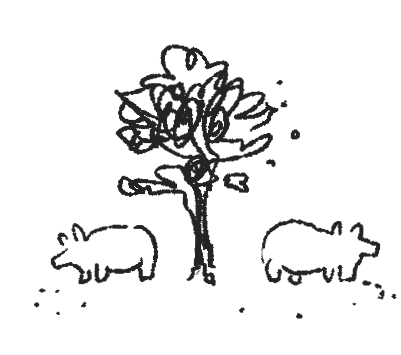
Animals
Our animals are moved through the vineyard across the seasons, each kind chosen for the role it plays in the whole. They graze the cover crops, clear weeds, and return fertility as they move — closing a cycle that would otherwise fall to machines, and tending the ground that tends the vines.
-
Blueface Leicester and Gotland sheep graze cover crops and weeds between the rows through the dormant season and rotationally graze around our grains and gardens during the growth season. We love them for their mowing and fertilizing, but the real bonus is the wool we get to work with!
-
Our blackberry bramble exterminators (and best friends).
-
The bees pollinate the orchard and gardens, move through the flowers planted among the vines, and in time will give us estate honey—one more part of the farm feeding the whole.
-
When we were clearing the land in 2021, we had a family of Red Tail Hawks build a nest and move in (after completely ignoring the nice prefab homes we built for them)! We’re lucky to share a home with them, as they’re excellent pest control and grape guards.
-
As we grow, chickens, ducks, pigs, and cows will join the farm—each with a job in the whole, from clearing and grazing to feeding the soil.
Plants
Our plantings reach well beyond the vines — orchard, gardens, herbs, grains, and flowers, each earning its place in the whole. Some feed the table, some feed the soil, and some feed the bees, and others simply extend the estate's expression beyond the bottle.
-
Apples, pears, apricots, mulberries, figs, persimmons, plums, and olives. Fruit for the table and the kitchen, plus habitat and diversity the vines alone can't provide.
-
The chef's larder: seasonal produce and culinary herbs grown for the table and the estate's dinners, tying the menu directly to the ground.
-
Planted among the vines. Support pollinators and beneficial insects—a living form of pest management—and are cut for teas and non-alcoholic offerings.
-
Sown between the rows. Legumes and grasses that fix nitrogen, hold the soil, and feed the soil life and the sheep—the seam that joins the plant and animal systems into one.
-
In the next few months we’ll be planting various grains for bread, and doubling as rotation that builds soil structure and organic matter between plantings.